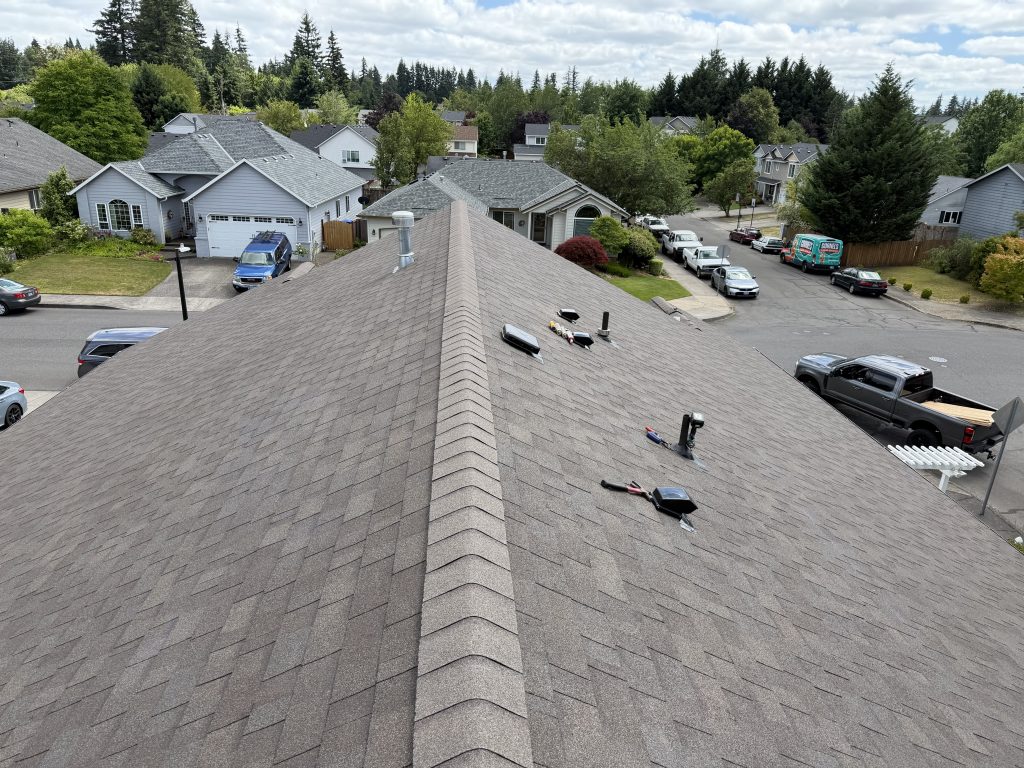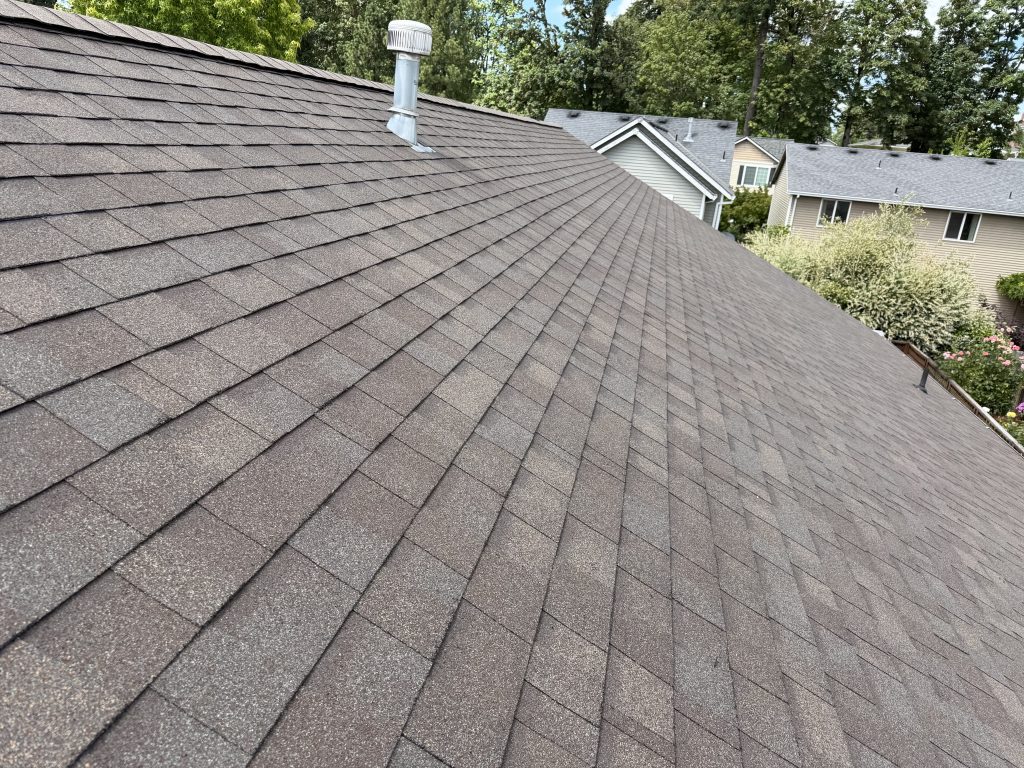
If your roof is leaking during a storm, here is the short version: contain the water, relieve any ceiling bulge, kill power to the affected room if water is near fixtures, stay off the roof, and call a roofer with same-day emergency service. We answer that call at 971-251-ROOF for Boring, Sandy, Gresham and the surrounding east metro. The rest of this guide walks through each step in order, what to leave alone until the storm passes, and what to photograph along the way so a possible insurance claim starts on solid footing.
The first fifteen minutes
1. Move things and contain the water
Pull furniture, electronics and anything valuable out from under the drip. Put down a bucket or bin, and lay towels or a tarp around it, because drips wander. If the drip is splashy, a board or a towel in the bottom of the bucket quiets it. This sounds obvious, and in the moment people skip it and spend the next hour mopping.
2. Relieve a bulging ceiling
If the ceiling is sagging or a paint blister is growing, water is pooling above the drywall. Put the bucket underneath, then poke a small hole in the low point of the bulge with a screwdriver or a pen. One controlled hole drains the pocket. Left alone, the pooled water spreads along the drywall until a whole section of ceiling comes down at once, and that is a far bigger repair than one patched hole.
3. Respect electricity
If water is coming through or near a light fixture, ceiling fan or smoke detector, do not touch the fixture. Turn off the breaker for that room, then place your buckets. Water and live wiring in the same ceiling is the one part of a roof leak that can hurt you tonight.
4. Start your photo record
Take photos and video of the drip, the ceiling, the puddles, and anything damaged, with timestamps. Thirty seconds of phone footage now is worth more than an hour of describing it later, whether to your roofer or your insurer.
What to leave alone until the weather passes
Stay off the roof. A wet asphalt roof is slick, a mossy one is worse, and doing it in wind and rain, in the dark, over a wet ladder, is how homeowners end up with an injury on top of a leak. Professional crews use fall protection for exactly this situation, and even they wait out the worst of a storm.
Skip the DIY tarp during the storm for the same reason. A tarp that is not anchored properly becomes a sail in the gusts that come off the Columbia River Gorge, and the flapping can strip more shingles than the leak is worth. Emergency tarping is a real service and we do it, with the right anchoring, when it is safe to be up there.
Do not start tearing out wet drywall or insulation mid-storm either. Containment first, demolition later. Once the leak is stopped, drying out the cavity properly matters more than speed.
Where the water is actually coming from
The drip in the hallway is almost never directly under the hole in the roof. Water enters high, runs along the underlayment, rafters or the top of the drywall, and drops at a seam or a light fixture. That is why a leak over the hallway can start at a pipe boot ten feet away on the other side of the ridge.
The usual suspects, in rough order of how often we find them: a cracked or worn pipe boot, flashing at a chimney, skylight or wall, wind-lifted or missing shingles from an east wind event, a valley where debris has dammed the water, and gutters so full that water backs up under the first course of shingles. On roofs near Boring and Sandy, moss is often the accomplice, holding water against the roof long enough for it to find the weak spot. Our Gorge wind damage guide covers the wind version in detail.
If you can get into the attic safely, a flashlight will often show you the entry point: a wet streak down a rafter, a shiny trail on the underside of the deck, daylight where there should be none. Note it and photograph it. Do not walk on the drywall between joists.
What same-day emergency service looks like
When you call 971-251-ROOF with an active leak, say so first. Active leaks go into the same-day queue. Tell us where the water is showing inside, what you can see from the ground, whether anything is on the roof, and when it started. Photos from your phone help us arrive with the right materials.
On site, the job is to stop the water and document everything. Depending on what we find, that means sealing or replacing the failed boot or flashing, replacing missing shingles, clearing the dam in a valley, or tarping a larger damaged area properly until a full repair can be scheduled in better weather. You get photos of what we found and what we did. If the damage points toward an insurance claim, that photo record and a written repair estimate are exactly what you will need; we provide those, and we do not negotiate or adjust claims, which in Oregon is the territory of licensed public adjusters and you.
After the storm: the follow-through
An emergency fix stops the water. It does not finish the job. Within a few days, get the wet materials dealt with: soaked insulation holds moisture against framing, and a damp ceiling cavity grows mold in weeks. Small areas dry out with airflow and patience. Larger ones are worth a restoration company.
Then get the roof looked at as a whole. A leak is often the first symptom of a roof entering its last years, and the storm just found the weakest point first. Our storm damage inspection walks the whole roof and the attic and produces a digital photo report, so you can see whether this was a one-off failure or the opening act. If it is the opening act, our guide to how long roofs last in Oregon explains what the signs mean, and the instant estimator gives you a replacement number in under a minute.
If a claim might be coming
Insurers generally expect a homeowner to take reasonable steps to prevent further damage after a storm, and they generally treat reasonable emergency repairs as part of the claim. Keep every receipt: tarps, buckets, the emergency service call, a night in a hotel if a room became unusable. Photograph before and after every step. Consumer groups like United Policyholders publish plain-language guides to Oregon claim rights, including the timelines your insurer has to respond.
What your policy covers is between you and your insurer, and sudden storm damage is treated differently from long-term wear. Our role is the roof: we stop the leak, document the damage, and give you a written estimate you can submit. Be cautious with any out-of-area roofer who shows up after a storm offering to handle the claim for you; our contractor checklist covers the red flags.
The storm-night kit worth having
- Two buckets and a stack of old towels where you can find them in the dark
- A headlamp or flashlight with charged batteries
- A screwdriver for relieving a ceiling bulge
- Your electrical panel labeled, so the right breaker takes seconds to find
- Our number saved in your phone: 971-251-ROOF
- Photos of your roof and ceilings from a dry day, as a before record
Ten minutes of preparation in September turns a panicked night in November into an annoying one. Our guide to preparing your roof for storm season covers the bigger version of that idea: the inspection and small repairs that keep most of these calls from happening at all.
Why leaks cluster in the first storms of the season
Roofers’ phones ring hardest in the first big storm of October and the first east wind event that follows, and the reason says something useful about prevention. A dry Oregon summer bakes roofs: sealant strips finish aging, pipe boots finish cracking, and small movements open hairline gaps at flashing. Nothing leaks, because nothing is testing it. The first sustained rain is the test, all at once, of everything that quietly failed since May. The first wind event then lifts whatever the rain revealed to be unsealed.
Practically, that means two things. If your roof made it through last winter but is more than a decade old, the weeks before the season starts are the time to look, which is the whole argument of our storm season preparation checklist. And if your roof does leak in the first October storm, you are in the busiest week of the roofing year, which is why describing the situation precisely on the phone (active leak, where inside, what you can see outside) moves you through the queue accurately.
Three leak stories, and what they teach
The pipe boot. Picture a Damascus homeowner with a ceiling stain that appears in the hallway every hard rain and dries invisible in between. The attic shows a shiny trail starting at a plumbing vent. The neoprene boot around the pipe cracked years ago, and only wind-driven rain from the right direction finds it. The fix is one boot and one hour. The lesson: intermittent stains are still leaks, and the dry weeks between them are when the framing does its quiet rotting.
The valley dam. A Sandy house under two big firs leaks over the kitchen in November. The valley above is carrying a season of needles, and water forced sideways out of the dammed valley walked over the edge of the underlayment. Clearing the valley and the gutters ends the leak without a single new shingle. The lesson: on tree-covered lots, debris is a roofing problem, and gutter season is roof season.
The wind tab. A Gresham roof loses a patch of tabs to a Gorge wind event, and the homeowner, seeing no water inside, waits. The underlayment holds through two storms and tears in the third; now there is a ceiling to repair along with the slope. The lesson is the east metro rule: missing shingles are an appointment, and the appointment is this week. Our wind damage guide has the full checklist.
Frequently asked questions
Is a roof leak during a storm an emergency?
An active leak is worth a same-day call. Water that is reaching drywall, insulation or wiring does compounding damage, and the entry point is usually cheap to fix compared to what another week of water costs. Best Roofing USA offers same-day emergency service for active leaks.
Can a roofer fix a leak while it is still raining?
Often yes, at least temporarily. Sealing a boot, replacing a few shingles or installing a properly anchored tarp can be done in light rain. In dangerous wind the crew stabilizes what can be safely reached and returns when the storm passes.
Should I go on the roof to find the leak?
No. A wet or mossy roof in storm conditions is a fall risk even for professionals. Check the attic with a flashlight if you can do so safely, and leave the roof surface to a crew with fall protection.
Will insurance cover a storm leak?
Sudden storm damage is generally treated differently from long-term wear, and the decision belongs to your insurer under your policy. Document everything, keep receipts for emergency steps, and submit the roofer’s photos and written estimate with your claim.
Leaking right now in Boring, Sandy, Gresham, Damascus, Happy Valley, Estacada or Clackamas? Call 971-251-ROOF. We offer same-day emergency service for active leaks. Not urgent? Get a 60-second instant estimate. Best Roofing USA LLC, Boring, Oregon. Oregon CCB 261305.