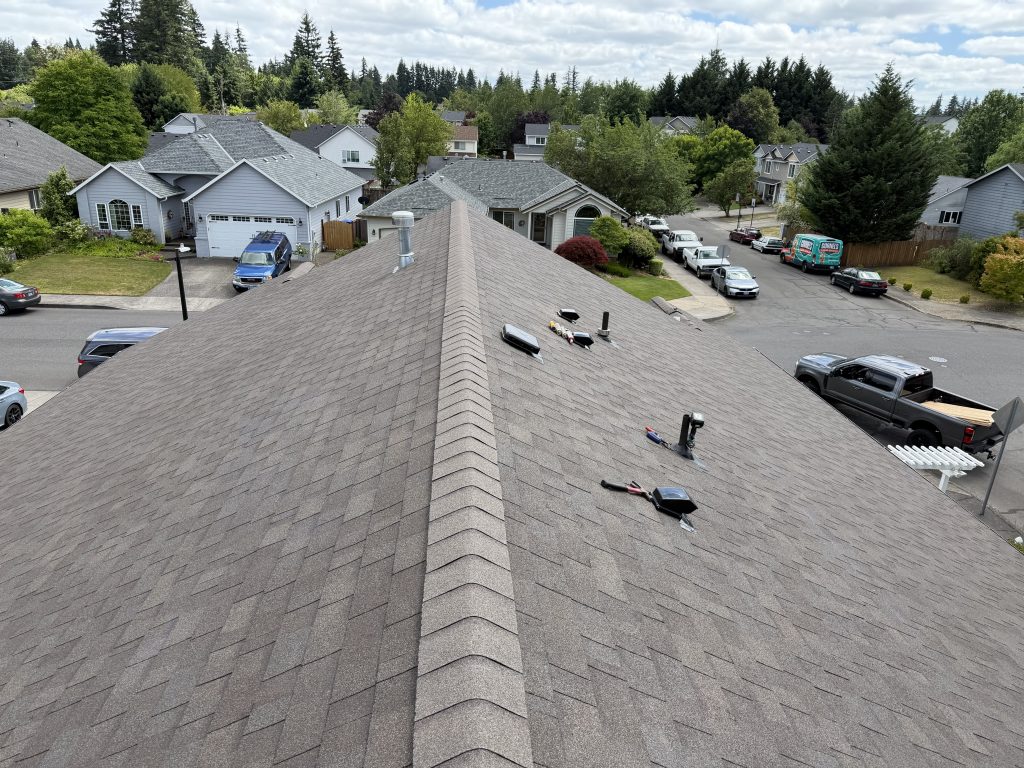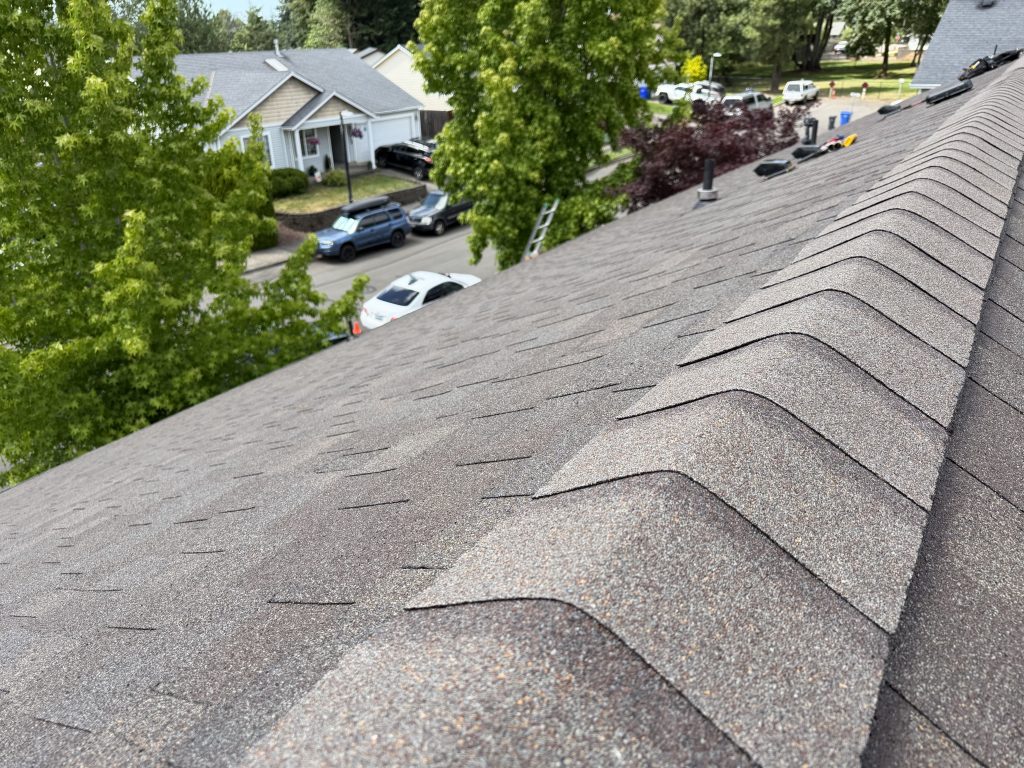
Do you need a roof replacement permit in Oregon? Homeowners in Boring, Sandy and Gresham ask us this constantly, usually after a neighbor got a different answer from a different roofer. The honest answer is “it depends on the scope,” and the state publishes the rule. Here is what it says, what it means for a typical reroof, and why you should let your contractor handle it either way.
What the State of Oregon says
Oregon’s Building Codes Division lists reroofing under both the “permit required” and “permit not required” columns for residential work. A permit is required when you are “applying roofing when all of the old roofing is removed, and all new roof sheathing is installed.” A permit is not required for “replacing roofing where the weight of the replacement or repair does not exceed 30 percent of the roof’s required live load design capacity and is not required to be fire resistant.”
In plain terms: a like-for-like shingle replacement that keeps the existing plywood decking often falls under the exemption. A job that replaces the decking, changes the structure, or adds significant weight (for example switching from composition shingles to tile) needs a permit. Local jurisdictions can also have their own requirements, so treat the state rule as the minimum.
Clackamas County
Boring, Damascus, Sandy, Estacada and unincorporated Happy Valley and Clackamas fall under Clackamas County Building Services unless the city runs its own building department. The county’s permitting process is fully online through its Development Direct hub. The Building Service Division can be reached at 503-742-4240 if you want to confirm whether your specific project needs a permit.
Gresham and Multnomah County
The City of Gresham runs its own permit center, and Troutdale, Fairview and Wood Village have their own arrangements. The state rule above still applies, but the application goes to the city permit center. Your contractor should know which desk to file with. If they do not, that is worth noticing.
Why the permit question matters even when the answer is “no”
The permit itself is not the point. The point is that a contractor who is willing to pull one and schedule the inspection is a contractor who is comfortable having their work looked at. Inspections catch missing ice barrier, bad flashing and nail patterns that will fail in wind. If the job qualifies for the exemption, ask your roofer what they do instead to document the work. Photos of the deck after tear-off and of the underlayment before shingles go on are the minimum.
What we do on every replacement
We pull permits and coordinate inspections as part of the job. You do not fill out forms or take a day off for the inspector. This is included at every tier, along with Malarkey Pro certified installation, our workmanship warranty, manufacturer warranty registration on your behalf, and full cleanup with a magnetic nail sweep.
What actually happens when a permit is pulled
Homeowners picture a permit as paperwork. In practice it is a short sequence of events that runs alongside the job. The contractor submits the application online with the scope of work, the address, and their license number. The jurisdiction issues the permit, usually within days for a straightforward reroof. The work is done. An inspector visits, looks at what the code cares about, and signs off. That sign-off is recorded against the property, and it is the one piece of the whole roofing project that survives a change of ownership.
That last part matters more than people think. When you sell a house in Clackamas County, buyers and their inspectors can look up permit history. A roof replacement with a closed permit is a documented fact. A roof replacement with no record is a story the buyer has to take on faith. If you plan to sell within a decade, the permit is worth having even in cases where it could technically be skipped.
What the inspector is looking for
A roofing inspection is short and specific. Depending on the jurisdiction and the timing, the inspector checks that the deck is sound, that underlayment and ice barrier are installed where the code requires them, that flashing at walls, chimneys and penetrations is done properly, that the shingles are fastened per the manufacturer’s instructions, and that ventilation is adequate. Some jurisdictions want a mid-roof inspection before shingles cover the underlayment. Others inspect at the end with photos of the earlier stages.
Notice what is on that list: fastening, flashing, ice barrier and ventilation. Those are exactly the things that fail first in the wet, windy corridor east of Portland. The inspection is a free second set of eyes on the details that decide whether your roof lasts.
The exemption, and how people misread it
The Oregon exemption is about weight and fire rating, and it is written for the case where you are putting a similar roof back on a similar deck. People stretch it in two directions. Some contractors treat it as “reroofs never need a permit,” which is wrong the moment sheathing is replaced or the structure is touched. Some homeowners treat it as “I can do anything without asking,” which is wrong the moment the project involves a heavier material, a change to the roof structure, or a jurisdiction with its own stricter rule.
Our position is simple. We pull the permit on replacements as a matter of course. If a particular project qualifies for the exemption and you would rather skip it, we will tell you what we document instead, and you make the call with the facts in front of you.
Jurisdictions in our service area
Where your roof is decides who you deal with. Boring, Damascus, Estacada and the unincorporated areas around Sandy and Happy Valley go through Clackamas County. Sandy and Happy Valley as cities have their own arrangements, and your contractor should know which applies to your address. Gresham, Troutdale, Fairview and Wood Village are in Multnomah County, but the cities handle their own building permits. Clark County and the Washington side of the river are a different state with a different code and a different license (ours is BESTRRU743JP).
You do not need to memorize any of this. The point of hiring a licensed local contractor is that they already have. If a roofer cannot tell you which office your permit goes to, that is a sign they do not work here often.
Tear-off versus layover
Because a second layer avoids tear-off labor and disposal, some contractors still offer it as a cheaper option. Building codes cap the number of layers, and once you are at the cap the next roof has to remove everything anyway. A layover also traps whatever was wrong with the old roof underneath the new one. Moss-damaged decking, rusted flashing, failed underlayment: all of it stays, and the new shingles sit on a surface that is not flat.
We recommend a full tear-off on every replacement for one reason. It is the only way to see the deck. On roofs east of Portland, where moss has often been sitting on the north slope for years, the deck is where the real problems hide.
What a permit-ready contractor brings to the table
A contractor who pulls permits routinely has an active Oregon CCB license (ours is 261305), carries the bond and insurance the license requires, and has a working relationship with the local inspectors. They know what the mid-roof inspection wants to see and they schedule around it so the job does not stall. On top of that, we are a Malarkey Certified Pro Contractor, which means the installation follows the manufacturer’s spec closely enough that the manufacturer will stand behind the warranty. Inspectors and manufacturers care about the same details. Doing it right once satisfies both.
A short checklist before you sign
- Ask whether the bid includes the permit and inspection, and who pays the fee.
- Ask which jurisdiction the permit goes to. The answer should be immediate.
- Ask how decking replacement is priced if the inspector or the crew finds rot.
- Ask for photos of the deck and the underlayment stage, whether or not a permit is required.
- Confirm the CCB number on the bid matches the active license at the CCB search site.
If you would rather skip the research and get a straight answer for your address, start with the 60-second instant estimate and we will walk you through the rest.
Permits for the jobs around the roof
A roof replacement often comes with side projects, and some of those have their own permit rules. Adding or enlarging a skylight changes the roof structure, so it is typically a permitted job even when the reroof itself is exempt. We install Velux skylights and handle that paperwork with the roof. Solar panels have their own checklist in Clackamas County (the county publishes a prescriptive roof-mounted solar form), and if you are planning solar within a few years, tell your roofer now so the roof and the mounts are designed together. Structural changes such as adding a dormer or changing the pitch are always permitted work and usually need drawings.
Gutters, downspouts, and fascia repair are generally exempt. Attic ventilation changes made as part of a reroof are handled under the roof permit when there is one. When in doubt, the Clackamas County Building Service Division at 503-742-4240 will tell you in a minute, and so will we.
What the permit costs, and who pays
Permit fees are set by each jurisdiction, usually on a schedule tied to the value of the work, and they are a small fraction of a roof replacement. On our bids the permit and inspection coordination are included in the price; you do not get a separate bill from the county. Some contractors list it as a separate line, which is fine as long as it is there. What you want to avoid is a bid where the permit is simply absent and nobody mentions it until you ask.
The inspection is on your side
Homeowners sometimes worry that an inspector will find something and make the job more expensive. In practice the inspector is checking the contractor, and what they find is a problem you would otherwise have discovered as a leak in three years. An inspection that catches missing ice barrier in a valley before the shingles go on costs the contractor an hour. The same problem found by rain costs you a ceiling. Think of the inspection as the one part of the job where someone with no stake in the sale is looking at the work on your behalf.
If a previous roof was done without a permit
Plenty of roofs in the area were replaced years ago with no record. That is usually not a problem you need to fix, and the exemption may well have applied. What it does mean is that nobody checked the deck, the flashing or the ventilation at the time, so an inspection before the next replacement is worth more than usual. When we tear off a previously unpermitted roof we photograph what we find, so the next record of your roof is a complete one.
Frequently asked questions
Does a roof repair need a permit in Oregon?
Small repairs that do not replace sheathing and do not add significant weight generally fall under the state exemption. Structural repairs do not.
Who is responsible for the permit, me or the roofer?
A licensed contractor should pull it under their license. If a roofer asks you to pull an owner permit for work they are doing, ask why.
Can I add a second layer of shingles instead of tearing off?
Building codes limit the number of layers, and a layover hides the condition of the deck. We recommend a full tear-off so the deck can be inspected and repaired before the new roof goes on.
How much does a permit add to the cost?
Permit fees are set by the jurisdiction and are a small part of the total. Get a real number for your roof with our 60-second instant estimate.
Questions about a specific project? Call 971-251-ROOF or get your instant estimate. Best Roofing USA LLC, Boring, Oregon. Oregon CCB 261305.