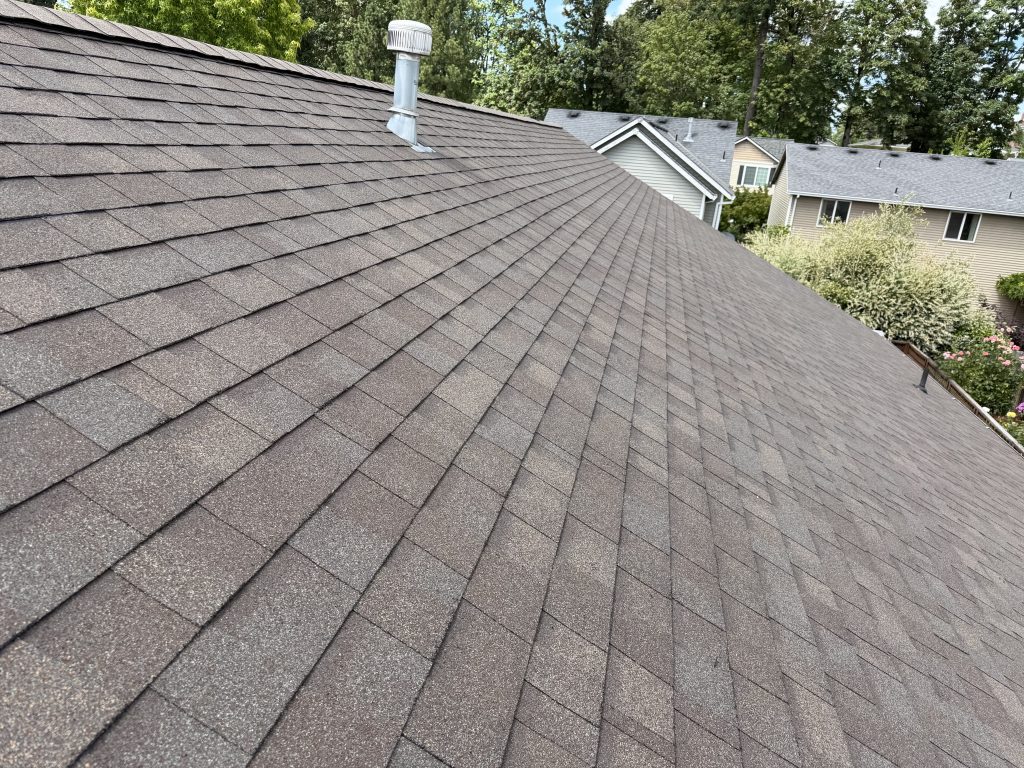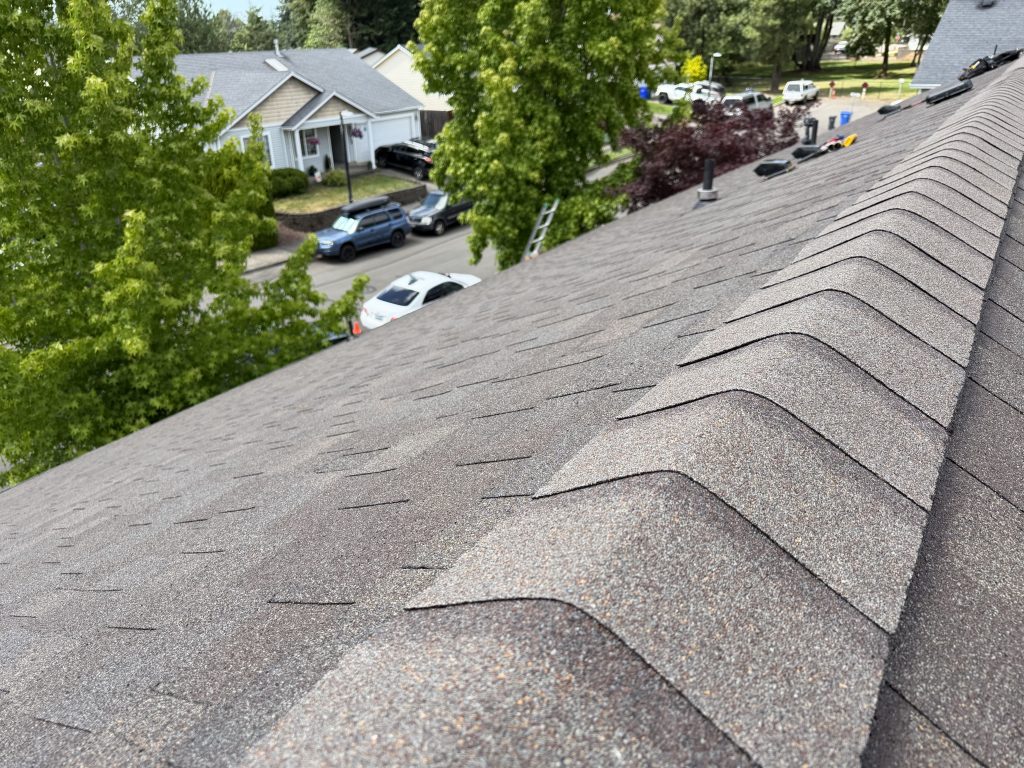
If you search “how much does a new roof cost in Oregon” you get a wall of national averages. Those numbers blend Phoenix ranch homes with Vermont farmhouses and then hand you a range so wide it is useless. A roof in Boring or Sandy is priced on the roof itself: its size, its pitch, what is under the shingles, and what has to happen to the flashing and vents. This post walks through the variables that matter here, so you can read a bid with confidence.
The six things that set the price of your roof
1. Roof size, measured in squares
Roofers price by the “square,” which is 100 square feet of roof surface. Your roof area is always larger than your home’s floor area because of pitch and overhangs. A 2,000 square foot single-level home with a moderate pitch can easily carry 25 to 30 squares of roofing. This is the biggest single factor, and it is why a footprint estimate is never accurate.
2. Pitch and complexity
A steep roof takes longer and needs more safety setup. Every valley, dormer, skylight and chimney adds cutting, flashing and detail work. Two homes with the same square footage can differ by a lot in labor simply because one is a plain gable and the other has four hips and two dormers.
3. Tear-off and what is underneath
Removing the old roof is part of the job. If there are two layers up there already, or if the decking has soft spots from years of trapped moisture under moss, that adds disposal and sheathing replacement. We cannot see rotten decking from the ground. It shows up on tear-off day, which is why a good bid explains how sheathing replacement is priced per sheet before the work starts.
4. The shingle and the system behind it
We install Malarkey shingles and offer three tiers: The Standard Roof (Malarkey Highlander AR), The Premium Roof (Malarkey Vista AR, with a full system warranty, and our most popular tier), and The Signature Roof (Malarkey Windsor Presidential, a designer shingle with color-matched accents and the longest warranty). Every tier includes Malarkey Pro certified installation, our workmanship warranty, and manufacturer warranty registration on your behalf. The shingle line you choose is the second largest price lever after size.
5. Ventilation, flashing and penetrations
A roof replacement is the right time to fix ventilation. Attics east of Portland see months of damp air, and poor ventilation shortens shingle life. New pipe boots, new step flashing at walls, and a proper chimney counterflashing are small line items that prevent the leaks that show up three winters later.
6. Access and cleanup
Tight lots, long driveways, and landscaping close to the house all affect how material gets loaded and how debris comes down. We include full cleanup with a magnetic nail sweep on every job. If a bid does not mention cleanup, ask.
Why we do not publish a price per square
A single number would be wrong for most of the homes we look at. Instead we measure your roof from satellite imagery and give you a real estimate for your address. It takes under 60 seconds and there is no obligation. Get your instant roof estimate here.
What a complete bid should include
- Roof area in squares and the pitch it was measured at
- The exact shingle product and color, plus underlayment and ice barrier
- Tear-off, disposal, and the per-sheet price for any decking replacement
- Flashing, pipe boots, and ventilation work called out separately
- Permit handling and inspection coordination
- Workmanship warranty and manufacturer warranty registration
- Cleanup, including a magnetic nail sweep
- The contractor’s Oregon CCB number printed on the document (verify it at the CCB license search)
Paying for a roof
Most homeowners do not plan for a roof the way they plan for a kitchen. We offer financing through Hearth. You can pre-qualify in about a minute with no impact to your credit score. Ask about it when you request your estimate.
How the three Malarkey tiers change the number
Homeowners often assume the shingle is a small part of the bill and labor is everything. On a full replacement the split is closer than people expect, and the product line you pick is the one decision that moves the price without changing the roof’s size. Here is how to think about the three tiers we install.
The Standard Roof (Malarkey Highlander AR) is the right answer for a lot of homes. It is an architectural shingle with a standard manufacturer warranty, and it looks like a proper roof from the street. If you are selling in the next few years, or the house is a rental, or the budget is fixed, this is where most people land and there is nothing wrong with that choice.
The Premium Roof (Malarkey Vista AR) is our most popular tier, and the reason is the full system warranty. When the shingles, underlayment, starter and ridge all come from the same manufacturer and are installed by a certified contractor, the warranty covers the roof as a system instead of shingle by shingle. For a home you plan to keep through the next wet decade, that coverage is usually worth the difference.
The Signature Roof (Malarkey Windsor Presidential) is a designer shingle with a thicker profile, color-matched accents, and the longest warranty of the three. It changes how the house reads from the curb. On a large, visible roof in Happy Valley or a farmhouse on acreage outside Sandy, it is the tier people choose when the roof is part of the look.
Whichever tier you pick, the same things are included: Malarkey Pro certified installation, our workmanship warranty, full cleanup with a magnetic nail sweep, manufacturer warranty registration filed on your behalf, and permits pulled and inspections coordinated. The tier changes the shingle and the warranty. It does not change how carefully the roof goes on.
Where the surprises come from
Every roofer in the Portland area has a version of the same story: the bid was clean, the tear-off started, and by ten in the morning there was a hole in the decking you could put your arm through. Nobody lied. The deck was rotten under a mossy north slope, and rot does not show from the ground. Surprises happen. The question is whether your contract already says what a surprise costs.
Three things to pin down in writing before work starts. First, the per-sheet price for replacing decking, and whether that price includes labor and disposal. Second, what happens if the roof has more layers than expected. Older homes around Gresham and Estacada sometimes carry two layers, and the second one is a full extra tear-off. Third, how ventilation upgrades are priced if the attic turns out to need them. A contractor who can answer all three without hesitating has done this before.
Why a Boring or Sandy roof is not a Portland roof
The cost calculators online are built on national averages, and even the “Portland” numbers are built on the city. Homes east of the metro have a few things in common that shift the work. Lots are bigger, so roofs are bigger. Tree cover is heavier, so moss damage to decking is more common and decking replacement shows up more often in the final invoice. Access is different too. A long gravel driveway in Damascus changes how the material gets delivered and how the debris trailer gets out.
Then there is the wind. From Gresham east through Troutdale and Corbett, the Columbia River Gorge pushes winter wind at roofs harder than anywhere else in the region. That does not change the price of a roof directly, but it changes what a careful contractor does at the edges, and it is a reason to be skeptical of a bid that is far below the others. Somebody is leaving something out.
Repair or replace: the cost logic
A repair is cheaper than a replacement today. Whether it is cheaper over five years depends on the roof. A ten-year-old roof with one bad pipe boot is a repair, and anyone who tells you otherwise is selling. A twenty-year-old roof with moss, curling tabs and a leak is a roof where every repair is a down payment on the replacement you are going to do anyway. The honest way to decide is an inspection with photos, so you can see what we see and make the call yourself.
We offer annual, real estate, storm damage and pre-purchase inspections, and every one comes with a digital photo report. If the roof has years left, the report says so and we suggest a maintenance plan instead of a replacement.
How to compare two bids that do not match
Lay them side by side and line up the following: the shingle product by name, the underlayment type, the ice and water barrier locations, the flashing scope (new versus reused), the ventilation plan, the decking replacement price per sheet, the permit, the cleanup, the workmanship warranty, and the total. If one bid is missing a line, ask for it before you compare totals. A bid that reuses old flashing and skips the permit is a different, smaller job, and it should be compared as one.
Also look at who is doing the work. Some companies sell the job and subcontract the crew. At Best Roofing USA, Ian Koons runs the crew himself and does the in-home consultation. The person who quoted your roof is the person on it.
Financing without the guesswork
We partner with Hearth for financing. You can pre-qualify in about a minute, and checking your options does not affect your credit score. Many homeowners run the estimator first, see the number, then check financing so they know their monthly figure before we ever come out. That order works well because it takes the pressure out of the in-home visit.
The fastest way to a real number
Type your address into the instant estimator on our roof cost page. It measures your roof from satellite imagery and returns an estimate in under 60 seconds, no phone call required. From there, if you want the tiers priced out on paper, we come out, walk the roof, check the attic, and hand you a bid that includes everything on the checklist above.
Questions homeowners ask us at the kitchen table
“Can I get a price over the phone?” We can give you a range if you know your square footage and pitch, but the instant estimator is more accurate than anything anyone can do from a phone description, because it measures the actual roof. Use that first, then call.
“Why is my neighbor’s roof so much cheaper?” Usually one of four things: a smaller or simpler roof, a lower shingle tier, no tear-off (a layover), or a bid that left out flashing, ventilation and permit. Ask to see their bid line by line and the gap usually explains itself.
“Do I need to be home?” For the consultation, yes, because Ian walks you through what he found. For the install, no. Most homeowners go to work and come home to a new roof and a clean yard.
“What about my gutters?” Gutters usually stay in place during a reroof. If they are damaged or undersized we will say so, but it is a separate decision and a separate line item, and we will not bundle it in without asking.
“Will the price change after you start?” Only for the items the contract already prices, like decking replacement per sheet. That is why those items are in the bid before work starts. A contractor who cannot show you those prices in advance is a contractor whose final number is a guess.
A note on the “free roof” pitch
After every wind event, somebody in Gresham gets a flyer promising a free roof through their insurance. There is no such thing. Insurance covers sudden, covered damage, minus your deductible, and the claim is between you and your insurer. In Oregon a roofing contractor may photograph the damage and give you a repair estimate, and that is where our role ends. We do not negotiate claims, and we would be careful with anyone who says they will. Our guide on checking a contractor’s license covers the rest of the red flags.
Frequently asked questions
How long does a roof replacement take?
Most single family homes are done in one to two days.
Is a roof cheaper in the off season?
Material pricing does not change much by season. Scheduling is easier in late summer and early fall before the rain sets in, and a dry roof deck is better for installation. Read more in our guide to the best time of year to replace a roof in Oregon.
Do you pull the permit?
Yes. Permits and inspections are handled for you on every replacement. See when Oregon requires a roofing permit.
Which areas do you serve?
Boring, Sandy, Gresham, Damascus, Happy Valley, Estacada, Clackamas and the surrounding Portland metro, plus Clark County in Washington.
Ready for a real number? Get your instant estimate or call 971-251-ROOF. Best Roofing USA LLC is family-run in Boring, Oregon. Oregon CCB 261305.