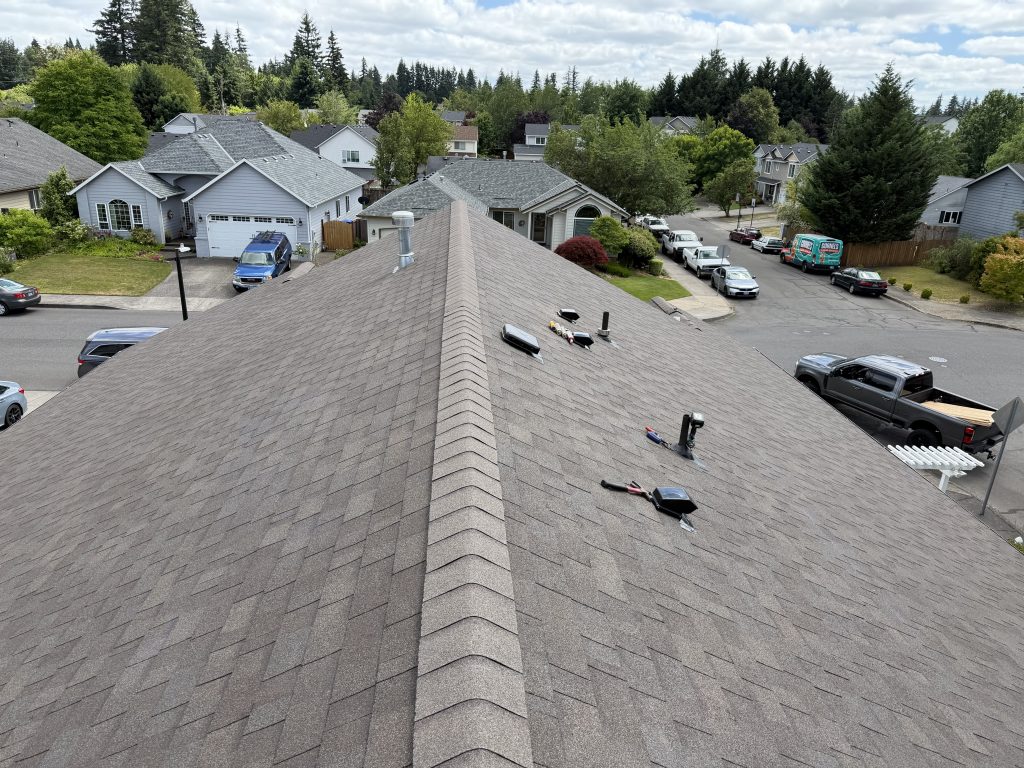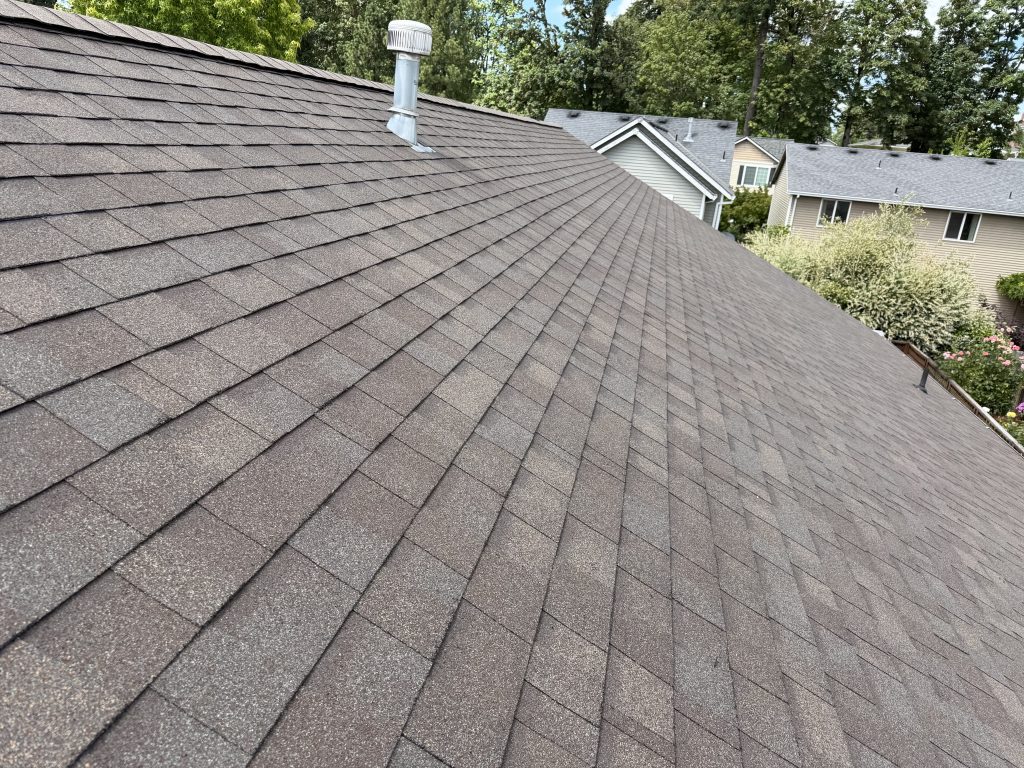
To prepare your roof for storm season in Oregon, work through five things before the rain settles in: clear the gutters and keep them clear, deal with the trees over the roof, fix the small failures (lifted shingles, cracked pipe boots, loose ridge caps), check the attic, and get a professional inspection if the roof is older or has history. East of Portland the deadline is real: Sandy’s wet season starts around October 13 and runs into May, November alone averages about 8.5 inches of rain, and the first Columbia River Gorge east wind advisories from the National Weather Service in Portland arrive as the season turns. This is the September checklist we would run on our own houses in Boring, Sandy, Gresham and Happy Valley.
Why September is the deadline
Two clocks run out at once in mid October. The rain clock: once the wet season starts, the roof rarely dries out, outdoor repairs get slower and less pleasant, and sealants cure poorly. The wind clock: the pressure pattern that drives cold air through the Gorge sets up in late fall, and the first advisories for the corridor from Troutdale eastward usually arrive before Thanksgiving. A repair done in September has weeks of warm, dry weather to seal and settle. The same repair in November happens between systems, on a wet roof, with the next storm already on the map. Our guide to roofing season timing covers the same logic for full replacements.
1. Gutters: the cheapest insurance on this list
Full gutters cause roof leaks that have nothing wrong with the roof. When water backs up over the back edge of a clogged gutter, it wicks under the first course of shingles and into the fascia, and the first course is below the ice-and-water barrier line on many older roofs. In fir country the gutters do not fill once a year with leaves; they fill continuously with needles, which mat into a felt that water will not pass.
Clean them as the big needle drop ends, check them again after the first real storm, and make sure downspouts actually discharge away from the foundation. While you are at it, look at the gutter slope: a gutter that holds standing water between storms breeds moss along the eave above it.
2. Trees: the biggest single risk overhead
Nearly every catastrophic roof call we take in winter involves a tree. The audit is simple and free: walk the house and look up. Dead limbs over the roof, hangers (broken branches lodged in the canopy), trunks leaning toward the house, fungus at the base, and anything touching the roof already. The Gorge wind loads trees from the east and northeast, so give those sides extra attention on homes from Gresham out through Corbett.
Limbs actually touching the roof do damage in ordinary weather, scouring granules off shingles with every breeze, and they feed the moss with shade and debris. Trim to give the roof daylight. For anything big, leaning, or close to the house, an arborist’s assessment costs little against what a fir through the ridge costs, and our tree-on-roof guide is the article you never want to need.
3. Small failures: fix them while they are small
From the ground, with binoculars, look for lifted or creased shingle tabs, missing shingles, ridge caps out of line, flashing bent away from chimneys or walls, and pipe boots with visible cracking. Every one of these is a minor repair in September and an active leak in December, because the east wind hunts for exactly these weak points and the winter rain exploits whatever the wind opens. Our east wind damage guide explains why the edges, the ridge and the leeward slope fail first.
Two rules from the safety file: stay off the roof, and be especially wary of a wet or mossy roof, which is slick in a way that surprises people. Ground plus binoculars plus attic covers almost everything a homeowner needs to see.
4. Moss: treat before the rain, or lose the window
A moss treatment needs dry weather to work, which makes late summer and early fall the last call. Treat now and the winter rain slowly sheds the dead moss off the roof. Wait until the wet season and you are treating a growing colony in its favorite conditions. The full picture, including why pressure washing is the wrong answer on composition shingles and what OSU Extension recommends instead, is in our roof moss guide.
5. The attic: twenty minutes with a flashlight
Pick a bright day and look up from inside. Daylight through the deck means a hole, whatever the shingles look like from outside. Water stains, dark streaks down rafters, and rusty nail tips are the record of past moisture. Matted or discolored insulation marks old leaks. Mold or a musty smell points at ventilation trouble, which winter makes worse as warm indoor air condenses against the cold deck.
Check that soffit vents are not blocked by insulation and that whatever exhaust the roof has (ridge vent, box vents) is clear. A ventilation problem found in September is a line item; found in February, it has usually been condensing onto the deck for months. Our roof lifespan guide covers what these attic findings mean for the roof’s future.
6. Know your storm-night plan
Preparation includes the version where something fails anyway. Know where your electrical panel is and label it. Keep buckets, towels and a flashlight findable in the dark. Save 971-251-ROOF in your phone. Take a few photos of your ceilings and your roof from the ground on a dry day, so you have a before record if a claim ever happens. Then read our step-by-step guide to a leak during a storm once, calmly, in September rather than for the first time at 2 a.m. in November.
When to bring in a professional
Run the checklist yourself if the roof is young and the attic is clean. Book a fall inspection if the roof is past its mid-teens, if last winter left stains or repairs, if the house is under heavy tree cover, or if you are simply done with ladders. Our inspection covers the roof surface, every penetration and flashing, the attic and the gutters, and it comes with a digital photo report, so you see what we see and the fix list is concrete. If the report says the roof is in its last season, you still have time to plan a replacement on your terms; if it says the roof is fine, you bought a winter of not wondering.
For roofs under heavy tree cover, our monthly maintenance plans (Bronze $29.99, Silver $49.99, Gold $59.99) put this whole rhythm on a calendar: inspections and treatments scheduled so storm season arrives to a roof that is ready. Details are on the services page.
The east metro storm calendar, briefly
It helps to know what you are preparing for. Mid October brings the switch to sustained rain; from there into May, the roof stays wet more than it dries. November is the wettest single month, at roughly 8.5 inches in Sandy. The east wind season overlaps it: when high pressure parks east of the Cascades and a low sits off the coast, the Gorge funnels cold air at the corridor from Troutdale and Corbett across Gresham, with advisories several times each winter and gusts above 60 mph near the Gorge mouth in the bigger events. Snow and ice visit a few times most winters, heavier close to the mountain around Sandy and Estacada.
Each ingredient stresses a different part of the roof. Sustained rain finds failed seals and dammed valleys. Wind works the edges, the ridge and any unsealed tab. Wet snow loads limbs that were already questionable. A roof prepared for all three is mostly a roof with clean water paths, sound edges and no dead wood overhead, which is exactly what this checklist produces.
Renters, landlords and the split checklist
A fair amount of the housing east of Portland is rented, and storm prep splits differently there. Tenants: your part is reporting early and small. The stain the size of a hand, the drip that happened once, the shingle in the yard after a windstorm: report them in writing when they happen, because the cheap fix window belongs to whoever hears about the problem first. Landlords: the gutter, tree and inspection items on this list are yours, and a fall inspection with a photo report is also documentation that the roof was sound going into winter, which is worth having if a dispute ever arises about when damage occurred.
For owners of rentals in Boring, Sandy or Gresham who are not local, this is one of the quiet arguments for a maintenance plan: the calendar does not depend on a tenant noticing, and the photo reports arrive wherever you are.
The thirty-minute version
If the full checklist is more September than you have, here is the triage: clear the gutters, remove or trim anything dead hanging over the roof, spend ten minutes with binoculars looking for lifted tabs and crooked ridge caps, and spend ten minutes in the attic with a flashlight looking for daylight and stains. Those four cover the failure modes that produce most winter emergency calls. Anything they turn up, hand to us while the weather is still dry, and if they turn up nothing, enjoy the winter.
What we find in a typical fall inspection
A composite of what September inspections turn up on east metro roofs in their teens: two or three cracked pipe boots, a run of ridge caps with failed sealant on the windward end, moss establishing along the north eave, a valley carrying needle litter, one slope of gutters with standing water, and soffit intake blocked by insulation in one attic bay. None of it is an emergency in September. Every item on that list has a January version that is: the boot becomes the hallway stain, the ridge caps become the missing patch after the first advisory, the moss becomes the soft decking, the valley becomes the kitchen leak.
The report prices the whole list at once, you choose what gets done, and the crew handles it in one dry-weather visit. That is the entire trick of storm readiness east of Portland: convert January emergencies into September line items while the weather still lets you.
Frequently asked questions
When should I prepare my roof for storm season in Oregon?
September through early October. The wet season east of Portland starts around mid October, and repairs, moss treatments and sealants all work better on a dry, warm roof.
What is the most important single thing to do before winter?
If you do only one thing, deal with the trees: remove dead limbs over the roof and trim anything touching it. Tree strikes are the most expensive storm damage we see, and overhanging limbs also drive moss and gutter problems.
Can I do this checklist myself?
Most of it: gutters, the ground-level walk-around with binoculars, the tree audit and the attic check. Leave the roof surface itself to a professional, and book an inspection if the roof is older or the attic shows stains.
What does a fall roof inspection include?
Best Roofing USA inspects the roof surface, flashing and every penetration, the attic and ventilation, and the gutters, and delivers a digital photo report with a concrete fix list. Same-day emergency service is available all winter for active leaks.
Want the professional version of this checklist done for you? Call 971-251-ROOF to book a fall inspection with a digital photo report, or get a 60-second instant estimate if the roof is due. Best Roofing USA LLC, Boring, Oregon. Oregon CCB 261305.