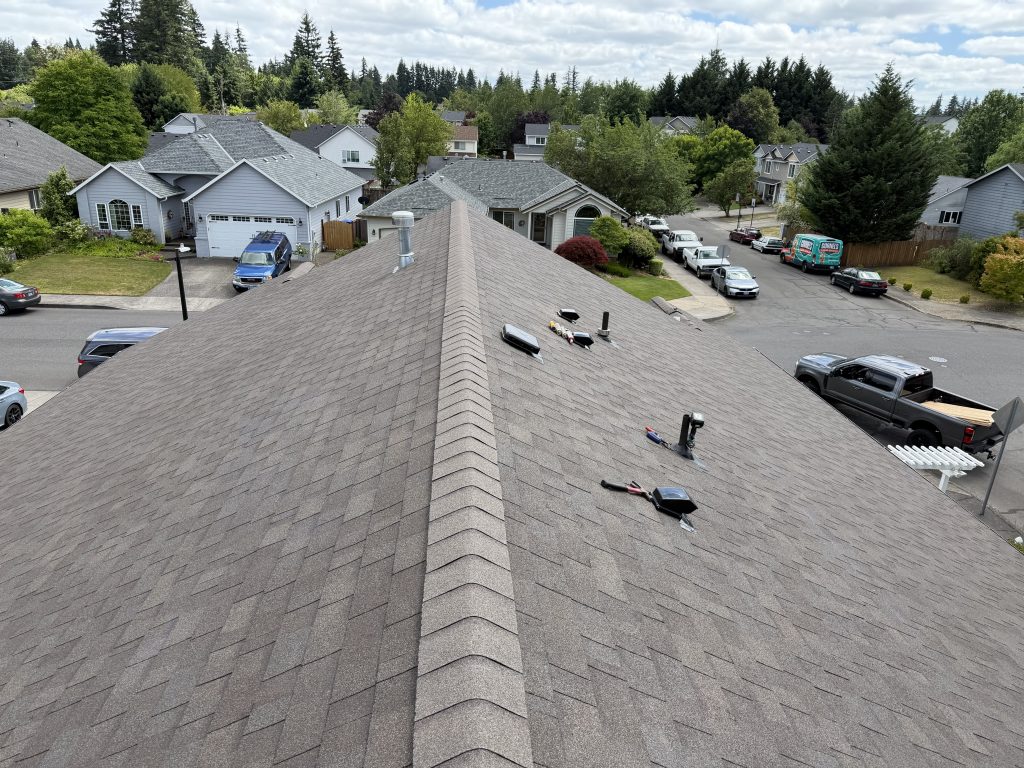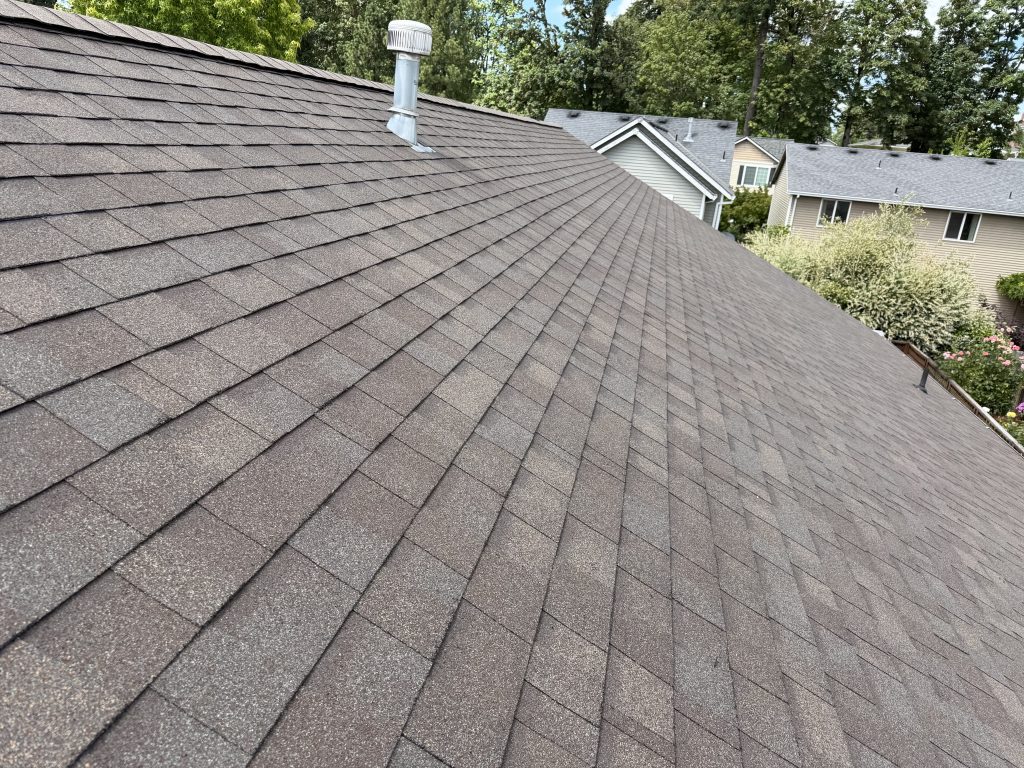
You can replace a roof in Oregon any month of the year. Roofers do, and a good crew knows how to work between showers. But there is a window when the job is easier, the deck is dry, the shingles seal fast and the schedule is open. For homes in Boring, Sandy, Gresham and Happy Valley, the best time to replace a roof in Oregon is late summer through early fall.
What the calendar looks like here
Sandy’s wet season lasts about seven months, from around October 13 to May 10, with November the wettest month at roughly 8.5 inches of rain. July and August are the driest, at about half an inch each. The rest of the east metro follows the same pattern with slightly smaller numbers. That gives you roughly June through early October when you can count on dry days more often than not.
Why dry weather matters for the roof itself
Two reasons. First, tear-off exposes the deck. If plywood gets soaked before the underlayment goes on, it needs to dry, and that adds a day. Second, asphalt shingles have a sealant strip that bonds each course to the one below. That strip activates with warmth and sun. A roof installed in August is fully sealed within days. A roof installed in December may not fully seal until spring, and an unsealed roof is more vulnerable to the Gorge east wind that arrives in the meantime.
Why it matters for you
Most single family homes are done in one to two days. In good weather that is exactly what happens. In the wet season a two-day job can stretch across a week of waiting for windows, with a tarped roof in between. Booking in the dry months means the crew shows up, finishes, and leaves.
The catch: everyone knows this
Because summer is the best time, summer is also the busiest. If you know your roof is due, get the estimate in spring and pick your dates before the calendar fills. If you are reading this in September, there is still time; October is often fine east of Portland, and a dry week in early November is not unusual.
What if the roof cannot wait?
An active leak in January does not care about the calendar. We offer same-day emergency service for active leaks, and a winter replacement done properly (dry deck, underlayment on the same day, work planned around the forecast) is still a good roof. The dry-season advice is about comfort and efficiency. A well-installed winter roof is still a sound roof.
A month-by-month view for the east metro
January through March. The wettest, coldest, windiest stretch. Emergency repairs and active-leak calls dominate. Replacements happen when they have to, planned tightly around forecast windows. Shingles installed now may not fully seal until spring.
April and May. Rain tapers, temperatures come up, and the first dry weeks appear. This is the time to get inspections done and estimates in hand. Contractors’ summer calendars start filling in May.
June. Reliably dry most years, though a late wet stretch is common enough that early June still needs a forecast check. Good installation weather; sealant strips bond quickly.
July and August. The driest months, at roughly half an inch of rain each in Sandy. The trade-off is heat. Very hot afternoons make shingles soft and easy to scuff, so crews start early and finish before the roof is at its hottest. Demand peaks and lead times are longest.
September and early October. Often the best window of the year. Still dry, cooler than August, and enough warmth left for the shingles to seal. The calendar is busy but not as packed as July. If you missed spring, this is the month to book.
Mid October through December. The wet season starts around October 13 in Sandy and November is the single wettest month at about 8.5 inches. Replacements are still done, but with more weather days and more tarping. East wind events begin, which is the wrong time for a roof that has not sealed.
What “working around the weather” really means
Roofers do not stop for every cloud. What they will not do is leave a deck exposed. On a wet-season job the crew tears off only as much as they can get underlayment on the same day. If rain arrives mid-morning, the exposed section is covered with underlayment or tarp and the work waits. A two-day job can become four working days spread over ten calendar days. Nothing about the finished roof is different, but the process is slower, and you live under a partly finished roof for longer.
There is also the deck itself. Plywood that gets soaked before the underlayment goes on needs to dry, and in November it does not dry fast. A good crew knows this and plans tear-off sections accordingly. It is one more reason to ask any contractor how they sequence a wet-weather job before you sign.
Heat is the other constraint
People assume the hottest day is the best roofing day. It is not quite that simple. Asphalt shingles get soft in direct sun above the mid-eighties, and a crew walking on soft shingles can scuff the granules and leave marks. The sealant bonds beautifully, but the surface is fragile for a few hours. On the hottest days crews start at first light and try to be off the roof by early afternoon. A warm, overcast September day is close to perfect: warm enough to seal, cool enough to walk.
Planning backwards from the rain
If the goal is a sealed roof before the first east wind advisory, work backwards. Install by the end of September. To install by the end of September, be on the schedule by July. To be on the schedule by July, have bids in hand by June. To have bids by June, get the inspection and estimate in April or May. That timeline is the reason our spring inspections are the most valuable ones we do: they turn a roof problem into a scheduled project instead of a winter emergency.
The instant estimator shortcuts the first step. Put your address into the tool on our roof cost page and you have a number in under a minute, in any month.
When waiting costs more than it saves
Some homeowners with a tired roof in September decide to “get one more winter out of it.” Sometimes that works. Sometimes the roof that had a few loose tabs in September has a leak in December, and the December leak has soaked insulation and stained a ceiling by the time anyone notices. The repair bill for the interior, the emergency call, and the winter replacement together cost more than the September replacement would have. If an inspection says the roof is marginal, treat “one more winter” as a gamble with real stakes, and make the choice with the photos in front of you.
Winter replacement, done right
Sometimes the roof cannot wait and the calendar says January. A winter replacement is a legitimate job when it is done with the right sequencing: tear-off in sections sized to the forecast, underlayment down the same day, deck kept dry, and the crew watching the hourly forecast rather than the weekly one. The shingles will seal when the weather warms. In the meantime a properly nailed roof holds. If the roof is leaking now, call us at 971-251-ROOF; we offer same-day emergency service for active leaks and we will tell you honestly whether the job is a repair or a replacement.
Maintenance follows the same calendar
The dry-season logic applies to moss treatment, gutter work and inspections as well. A late-summer moss treatment has time to work before the rain returns. A fall gutter clearing after the leaves drop keeps the first course of shingles out of standing water. A spring inspection catches winter damage while it is small. Our maintenance plans put inspections and treatments on a schedule so they happen without anyone having to remember. Details are on the services page.
Repairs have a season too
The same logic applies to smaller jobs. Resealing flashing, replacing a pipe boot, resetting ridge caps loosened by last winter’s wind: all of it is faster, safer and more durable on a dry, warm roof. Sealants cure properly, adhesives bond, and the crew is not working on a slick surface. If an inspection in spring turns up a short list of repairs, get them done in summer rather than waiting for the leak that proves they were needed.
Skylights and ventilation: do them with the roof
If you have been thinking about replacing a cloudy skylight or adding attic ventilation, the roof replacement is the moment. The crew is already at the ridge and the eaves, the flashing is being done anyway, and a Velux unit installed with the roof is one job instead of two. Bundling these into a dry-season replacement means the whole roof system is sealed and settled before the rain arrives, rather than opening the roof again in October.
How we schedule
Once you accept a bid, we agree a start window rather than a single day, because the forecast decides the exact morning. We order material, pull the permit, and confirm the day with you the week before. Most single family homes are done in one to two days. The crew arrives early, tears off only what can be covered the same day, and finishes with a full cleanup and a magnetic nail sweep of the yard and driveway. You get the manufacturer warranty registration confirmation and the photo record afterward. Book in spring and that window is yours to choose; book in August and you take what is left.
Three timelines, one roof: an illustration
Picture three homeowners with the same tired roof and three different calendars.
The planner. A Happy Valley homeowner gets an annual inspection every April as part of a maintenance plan. In year twelve the photo report shows curling on the south slope and the first soft spot on the north. She gets bids in May, chooses the Premium tier in June, and the roof goes on in the second week of September. The shingles seal in the warm weeks that follow, and the first east wind of November finds a roof that is one connected surface.
The September caller. A Boring homeowner notices granules in the gutter while cleaning them in late September and calls. The inspection finds a roof that is tired but dry. There is still a window, and the replacement goes on in mid October between two rain systems, sequenced so the deck is never open overnight. It seals more slowly in the cooler weather but holds through the winter.
The January leak. A Gresham homeowner wakes to a stain over the dining room after a Gorge wind event. The same-day visit stops the leak. The inspection shows a roof at the end of its life with a slope of creased tabs. He chooses to replace in February in short weather windows, which works, but it takes more calendar days and includes an interior repair the September homeowner never had to pay for. He now has an annual inspection on his calendar.
All three ended up with a good roof. Only one of them chose the timing.
Frequently asked questions
Is a roof cheaper in winter?
Material pricing does not move much by season. What changes is scheduling flexibility and how many weather delays you should expect.
Can you install shingles in the rain?
Light showers can be worked around. Steady rain means the deck stays covered and the crew waits. A good contractor plans tear-off sections so nothing is left open overnight.
How far ahead should I book?
For a summer install, get your estimate in spring. For anything else, call and ask; the schedule changes week to week.
Does the season affect the warranty?
No. Manufacturer and workmanship warranties apply regardless of install date, provided the roof is installed to spec.
Want your roof done before the rain? Get a 60-second instant estimate or call 971-251-ROOF. Best Roofing USA LLC, Boring, Oregon. Oregon CCB 261305.